X-Type Keyboard Layout
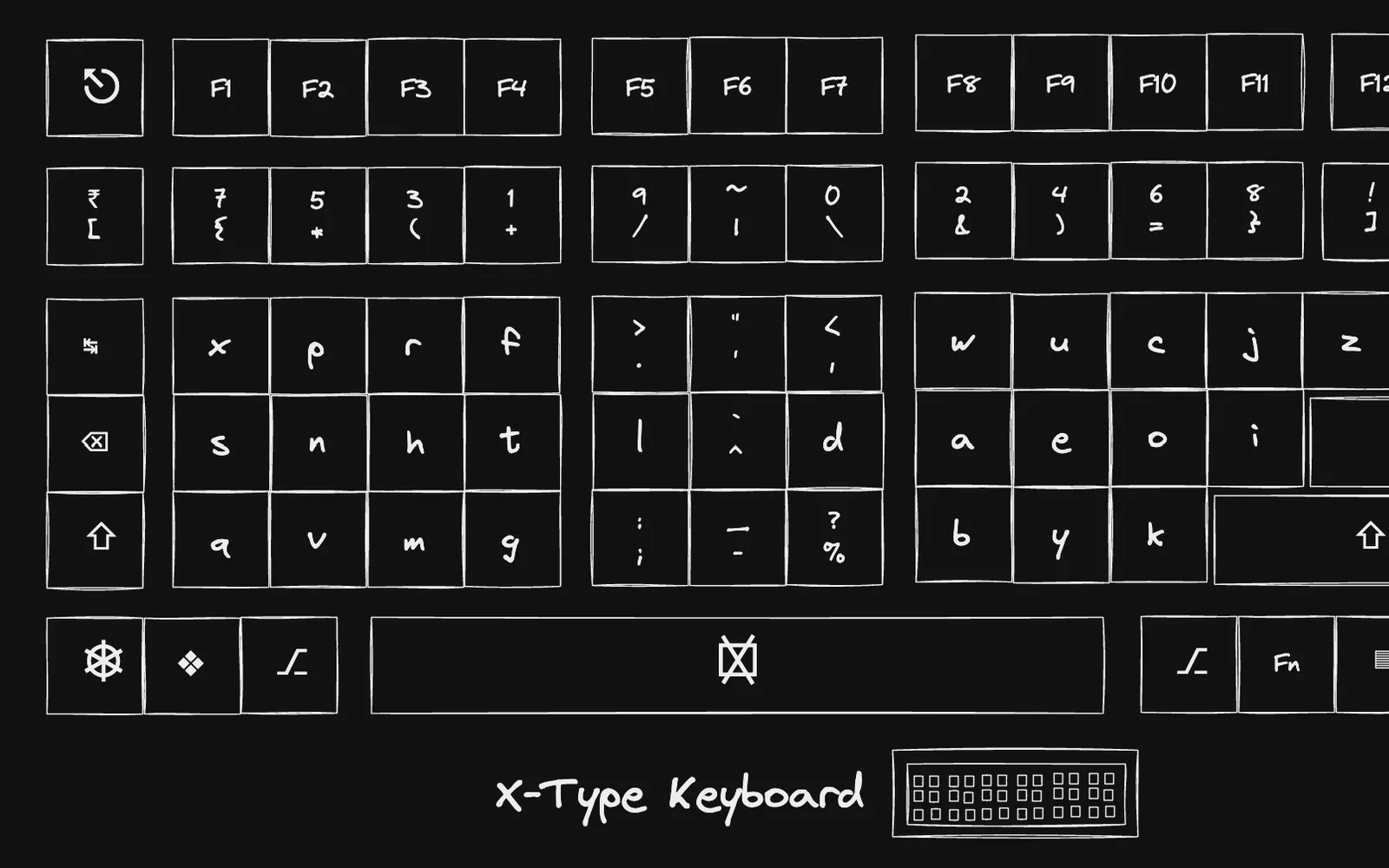
Custom keyboard layout designed via corpus analysis for an Indian typist — 213 WPM across 4 operating systems over 11 years
213WPM
Karabiner-ElementsJSONXKBJavaAndroid SDK
The Data-Driven Case for Replacement
QWERTY was designed in the 1870s for mechanical typewriter constraints that no longer exist. Every alternative layout designed since has beaten it on the metrics that matter for modern typing: finger travel distance, same-finger bigram frequency, hand alternation. The existing alternatives — Dvorak, Colemak, Workman — were all optimised on English corpora. I type Hindi, Hinglish, and English in roughly equal measure. None of them were designed for that.
At fifteen I built my own corpus — a representative sample of the text I actually type — and uploaded it to the Patorjk Keyboard Layout Analyzer. I iterated key positions until X-Type beat every mainstream alternative on the analyzer's combined metric. The layout ships the vowels differently from any Western alternative because the bigram distribution in Hinglish is not the same as in English. That specificity is what the data justified and what a generic alternative couldn't have produced.
Four Operating Systems, Eleven Years
The macOS implementation is two Karabiner-Elements JSON files — xtype-left-symbols.json and xtype-right-symbols.json — defining tap-hold dual-purpose symbol modifier layers with 43 manipulators and a 300ms disambiguation window. Every programming symbol is reachable from home row. Android was an InputMethodService app. Linux uses XKB. Windows uses a custom layout definition.
Eleven years of daily use across four operating systems. 90 WPM at the start. 213 WPM now. The growth curve is not exceptional — any typist who practices seriously for a decade improves — but the X-Type layout means the improvement happened without finger travel overhead that accumulates into injury over time.
The long blog post version of this story — the data, the corpus, the iterations — is at the X-Type blog entry. The short version is: look at the default, ask whether it was designed for your situation, build the evidence that a better option exists, then do the work to ship it to every device you own.
Did this resonate?
Love
Fire
Insightful
Clap
Thought-provoking
Comments
Loading comments...