3D RAD Car Racing Game
First game built at age 9 — skybox, water terrain, enemy AI, and the origin of the Xczer identity
2009origin event
3D RAD
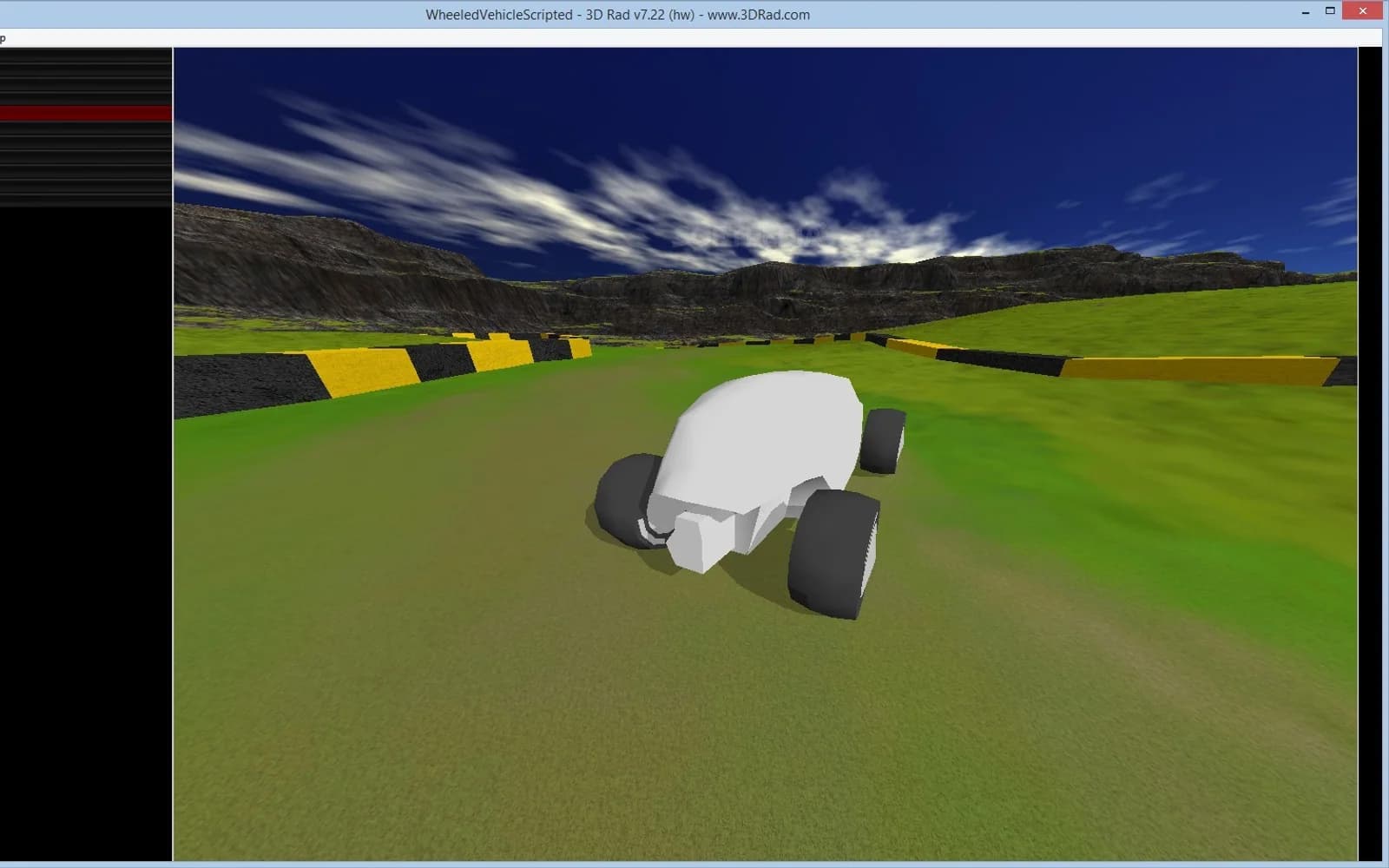
Making the Claim True
I told my friends I could make games. I was nine, I had just gotten a new laptop, and I was so excited about the machine that I made the claim without thinking. Then I went home and realised I had no idea how to make a game.
The options were obvious: walk the bluff back, or make it true. I have never been comfortable walking things back. I downloaded 3D RAD — a visual plugin-graph engine that compiled to Windows executables — found a PDF tutorial someone had uploaded to a forum, and worked through it.
3D RAD has no code. You wire plugins together: a vehicle physics plugin, an AI opponent plugin, a skybox renderer, a water-plane plugin, terrain sculpt and paint tools. The game that came out of it had a racing track that crossed over water, textured terrain, AI cars that chased you around the circuit, and a proper skybox so the world felt like it had edges. It ran. I showed my friends. The claim was true.
What It Actually Started
The game is gone — local executable, no version control, the files lost to time. What stayed is the instinct. Make the claim true. That reflex has driven every project since: if I say I can build something, the appropriate response to not knowing how is to learn, not to revise the claim downward.
After shipping the game, the next instinct was world-building. My friend and I co-wrote a multi-character game story arc under our school desks — hero names, factions, abilities. I named my protagonist Xczer. That handle is my GitHub identity, my portfolio domain prefix, every piece of work since, seventeen years later. It started with a car game built at nine to keep a promise.
The 14-year arc from this to a Unity self-driving car trained with reinforcement learning is a straight line, even when it doesn't look like one from the inside.
Did this resonate?
Love
Fire
Insightful
Clap
Thought-provoking
Comments
Loading comments...